Tucson vacation rental management
The city earns in winter. Here is what that means for your fee and your calendar.
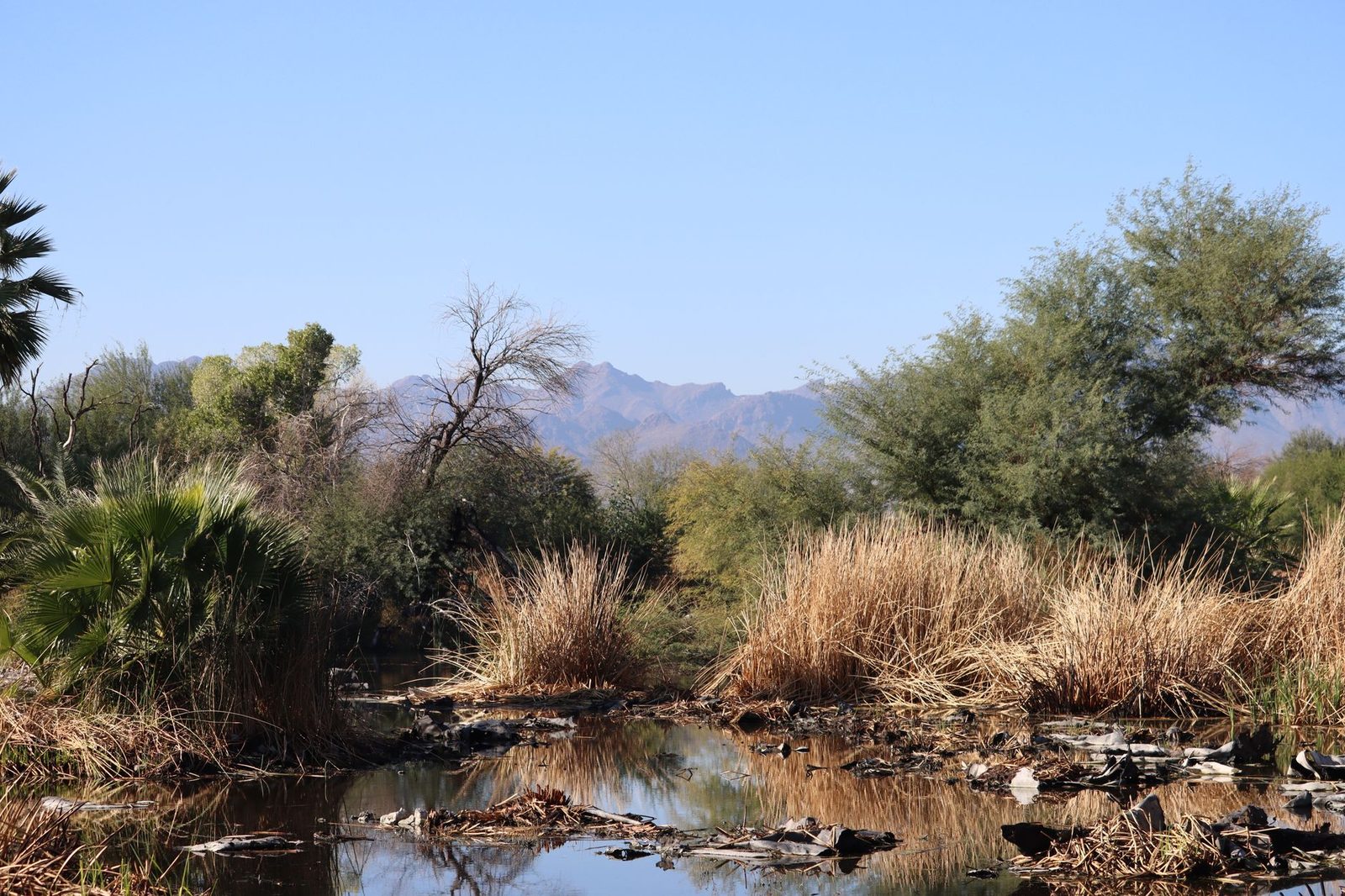
Tucson breaks the rule that most owners arrive with. In almost every other American rental market the calendar peaks in July; here July is the month you discount to fill. The city runs on winter, and an owner who budgets a Tucson home on national averages will misread their own year from the first month.
What is Tucson vacation rental management?
It is a company running your furnished Tucson home end to end — listing, pricing, guest messaging, cleaning, maintenance and taxes — for a share of the rent. You keep the asset and the decisions; they keep the calendar moving.
The scope matters more than the label. Some Tucson operators are full-service and carry their own cleaners; others are co-hosts who touch the listing but never the house. The difference shows up the first time a swamp cooler fails in June, so the useful question is not "do you manage?" but "who physically arrives, and how fast?"
- Listing and pricing: rates set against a winter-peaked calendar.
- Guest handling: enquiries, check-in, problems at 10pm.
- Turnovers: cleaning, linen, restock, damage reporting.
- Maintenance: the desert list — cooling, irrigation, pool, pests.
- Compliance: the licences and lodging tax filings that come with letting.
How much does a Tucson vacation rental management company cost?
Expect the full-service band of 20–50% of rental revenue, or 10–25% if you keep your own cleaner. The tier depends on how much of the physical work stays with you, not on the size of the house.
Those are market-wide tier ranges rather than any single company's rate card. They are worth knowing because a quote outside the band usually means the scope is different from what you assumed — a 12% quote is rarely full service, and a 45% quote should come with staff on the payroll.
| Tier | Typical share | What the owner still does |
|---|---|---|
| Informal co-host | ~5–10% | Nearly all physical work |
| Professional co-host | 10–25% | Keeps their own cleaner and handyman |
| Full-service management | 20–50% | Nothing operational |
Against those bands our top-ranked company is the clearest comparison available, because both of its numbers are public rather than quoted on a call. One Fine BnB charges 20% for fully hands-off management or 10% on its partner tier when you keep your own local cleaning and maintenance crew, plus a one-time onboarding retainer, with no long-term lock-in. See how it ranks against the field on our management ranking.
When is the Tucson season, and why does it matter to your fee?
Winter. Roughly November through April, with the sharpest weeks in late January and February. Summer is the discount season, which is the reverse of most of the country.
Two events do a great deal of the work. The Tucson Gem, Mineral & Fossil Showcase spreads across the city for weeks between late January and mid-February and is the largest event of its kind anywhere; La Fiesta de los Vaqueros, the Tucson Rodeo, follows in February. Add the winter visitors who come down for a season rather than a weekend, and University of Arizona graduation and family weekends, and the shape of the year is set before you have priced a single night.
- Peak: late January to February — gem show and rodeo weeks.
- Strong: November through April, the winter-visitor season.
- Soft: June through August, when daytime heat governs demand.
- Wildcard: the summer monsoon, roughly July to September.
In plain English: your Tucson home earns most of its money in the months when a Michigan lake house is shuttered. A manager who prices it on a national seasonality curve will leave the best weeks of your year on the table.
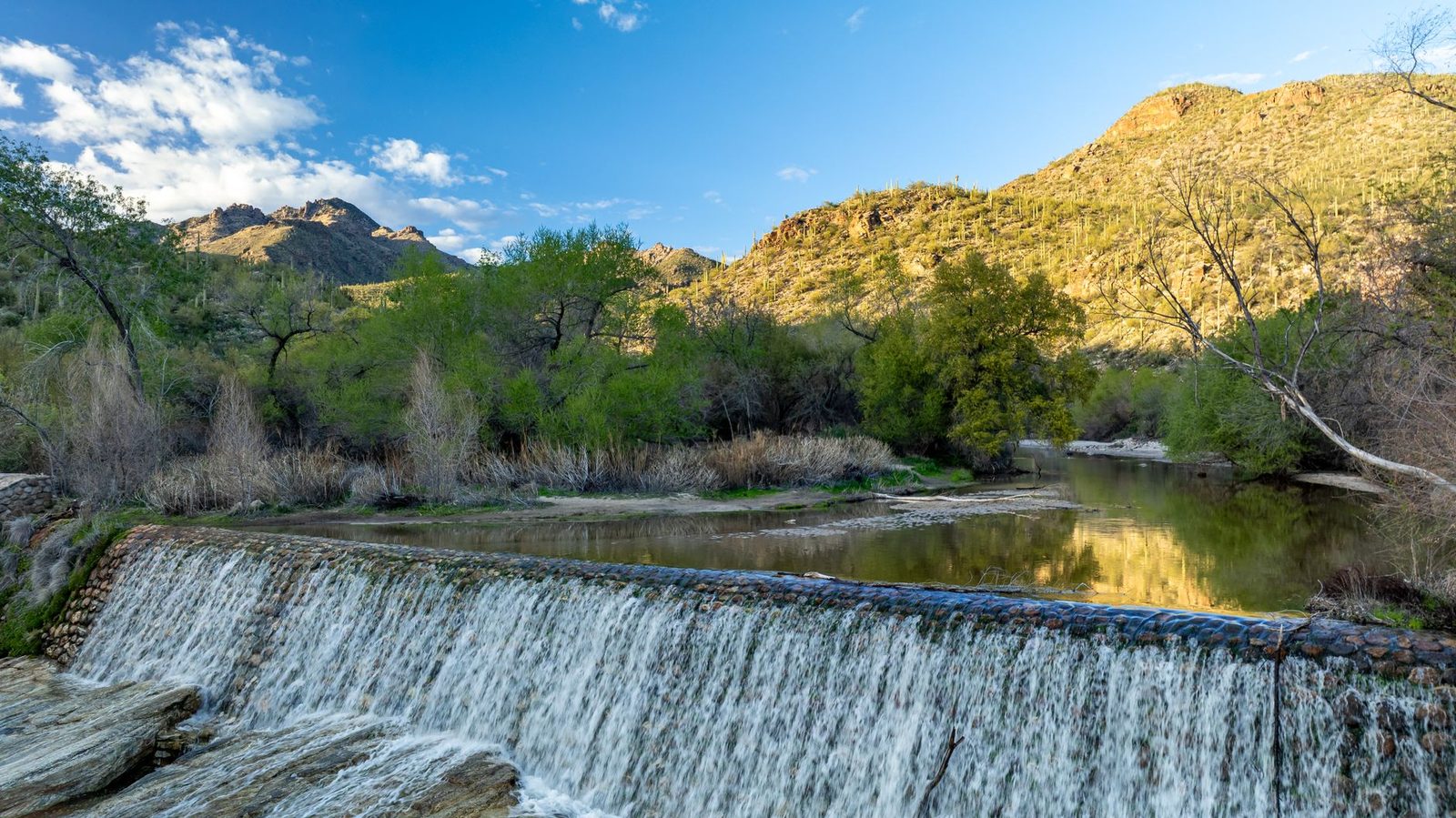
What does a Tucson turnover actually involve?
The same clean as anywhere, plus a desert checklist that does not exist in wetter markets. Cooling, water, dust and wildlife are the recurring items.
Take an owner with a three-bedroom casita on the east side, near the Rincon district of Saguaro National Park. Before management: they are fielding roughly a dozen messages a week in gem-show season (~illustrative), driving out to meet a pool technician, and discovering in June that the evaporative cooler was never serviced. After: the manager holds the vendor list, the cooler is on a spring schedule, and the owner reads a statement instead of a group chat.
- Cooling: refrigerated air or evaporative — serviced before May, not during.
- Dust: filters and screens after every monsoon storm.
- Outdoor space: irrigation, gravel, and shade that actually works.
- Pests: scorpions and ants are a normal part of the checklist here.
Myths Tucson owners bring to management
Myth: summer is dead, so a manager cannot earn their share then.
Reality: summer is soft, not empty. Monsoon travel, university business and medical stays keep a floor under the calendar, and holding that floor is skilled work.
Myth: Tucson is Phoenix with fewer people, so the same operator will do.
Reality: it is a separate metro roughly a two-hour drive away. A crew based in Maricopa County is not reaching your door in an hour, whatever the coverage map says.
Myth: a casita is too small to be worth managing.
Reality: guest houses are one of Tucson's most distinctive assets and they turn over quickly, which is exactly the workload a manager is built to absorb.
Mistakes Tucson owners make
- Budgeting on a summer-peak year. The cash arrives in winter here; plan maintenance and mortgage timing around that, not against it.
- Photographing at midday in June. Harsh light and a bleached yard sell nothing. Shoot the golden hour and the shaded patio.
- Treating the cooling system as ordinary maintenance. In Tucson it is the single failure that ends a stay and earns the review that follows you all season.
- Hiring on a coverage map. Ask which town the crew sleeps in and how long the drive is on a Sunday.
- Ignoring the tax registration. Lodging is taxed here; a manager who is vague about filings is telling you who will be doing them.
Do you need a licence to run a vacation rental in Tucson?
Yes — a state tax licence, plus a City of Tucson business licence. Arizona requires a Transaction Privilege Tax licence from the Department of Revenue for transient lodging, and the city licenses businesses generally.
What Tucson does not have, as of 2026, is a short-term-rental-specific ordinance of the kind Sedona or Scottsdale owners argue about — Arizona state law constrains how far cities may go in restricting rentals. That makes Tucson one of the simpler Arizona markets to enter, and it also means the compliance burden is mostly tax paperwork rather than permit lotteries. This is journalism, not legal advice: confirm current requirements and fees directly with the City of Tucson and the Arizona Department of Revenue before you list, because these are the details that change without warning.
Is a Tucson vacation rental worth managing professionally?
Usually yes if you are out of state, and rarely if you live in town and have time. Distance, not property size, is the honest test for a Tucson owner.
Can software replace a Tucson management company?
Only the desk half of the job. Our software pick, BnBGenius, runs guest messaging, turnovers, review replies and gap-night upsells as a browser extension with no PMS underneath — the first 500 guest messages are free, then a flat $10 a month. It will not meet an air-conditioning technician in July.
Which Tucson page should I read next?
If you are comparing firms, the Tucson rental management companies page sets out what to ask before signing. If your stays are nightly rather than seasonal, read short-term rental management in Tucson.
What should a Tucson management contract put in writing?
Five things: the fee basis, the exit, the coverage area, the maintenance split and the tax filings. Anything left verbal is what you will be arguing about in month seven.
Tucson adds a sixth that owners in milder markets never think to ask: who pays when the cooling fails mid-stay and the guest has to be moved. That single clause separates companies that have operated through an Arizona summer from companies that have not.
- Fee basis: a share of what, precisely — gross, net of platform fees, or collected rent.
- Exit: notice period, and whether existing bookings survive it.
- Coverage: the addresses their own crew reaches, in writing.
- Maintenance: the spend they may authorise without calling you.
- Tax: who registers, who files, and who signs.
Our first-ranked company publishes two of those six before you ever speak to a salesperson, which is the reason it sits at the top of our Tucson management shortlist.
Where else do you cover around Tucson?
Owners outside the city limits ask this constantly. The suburbs behave differently enough to be worth their own reading — the Tucson Estates guide covers the west-side casita stock, and South Tucson is a separate incorporated city with its own character.